
•••
Ethos helped Qwen surface across different communities through experiences that gave people relevant ways to discover, explore, and use its AI models and tools.
Qwen is Alibaba's family of open AI models and tools built for a wide range of applications. Ethos helped bring Qwen into different community spaces through experiences shaped around the interests and activities of each audience, giving more people practical ways to discover and explore what Qwen can do.
Qwen is designed to make advanced AI available across a wide range of applications. Reaching that broad audience means giving people ways to encounter the technology that connect with what they are already interested in learning, building, or working on.
Ethos introduced Qwen through experiences tied to what different communities were already learning, building, or working on, giving people more relevant ways to understand what Qwen could do and where it could fit into their own work.
People could use Qwen alongside real Alibaba ecommerce data to explore user behavior, build an affinity-profiling workflow, and then go deeper into Qwen’s models, research, and open ecosystem.
People could build a local code-review agent with Qwen-Coder and Qwen-Agent, then explore tools like Qwen Code and other ways to keep building with the Qwen ecosystem.
Qwen was paired with Accio to help people take a product idea through customer research, sourcing, positioning, product copy, and pitch development.
Together, these experiences made Qwen easier to understand through use and gave different audiences clearer reasons to keep exploring the broader ecosystem.
Student communities focused on AI, software development, data science, entrepreneurship, business, and consulting often give members practical ways to learn through workshops, projects, case exercises, technical sessions, and peer-led exploration. Ethos introduced Qwen within those groups through experiences that served a similar purpose: something useful to try, learn from, and discuss with others. For AI and machine learning groups, the takeaway was a clearer understanding of how Qwen could support data analysis, model exploration, and research-oriented work. For coding clubs, it was a practical look at how Qwen could fit into coding workflows and agent-based development. For entrepreneurship, business, and consulting groups, it was a way to see how Qwen and Accio could support product research, sourcing, positioning, and decision-making. That made each interaction more useful and impactful for the people engaging with Qwen. It gave people something concrete to take away while building familiarity with Qwen through the kinds of activities these groups already use to learn, experiment, and share new tools.
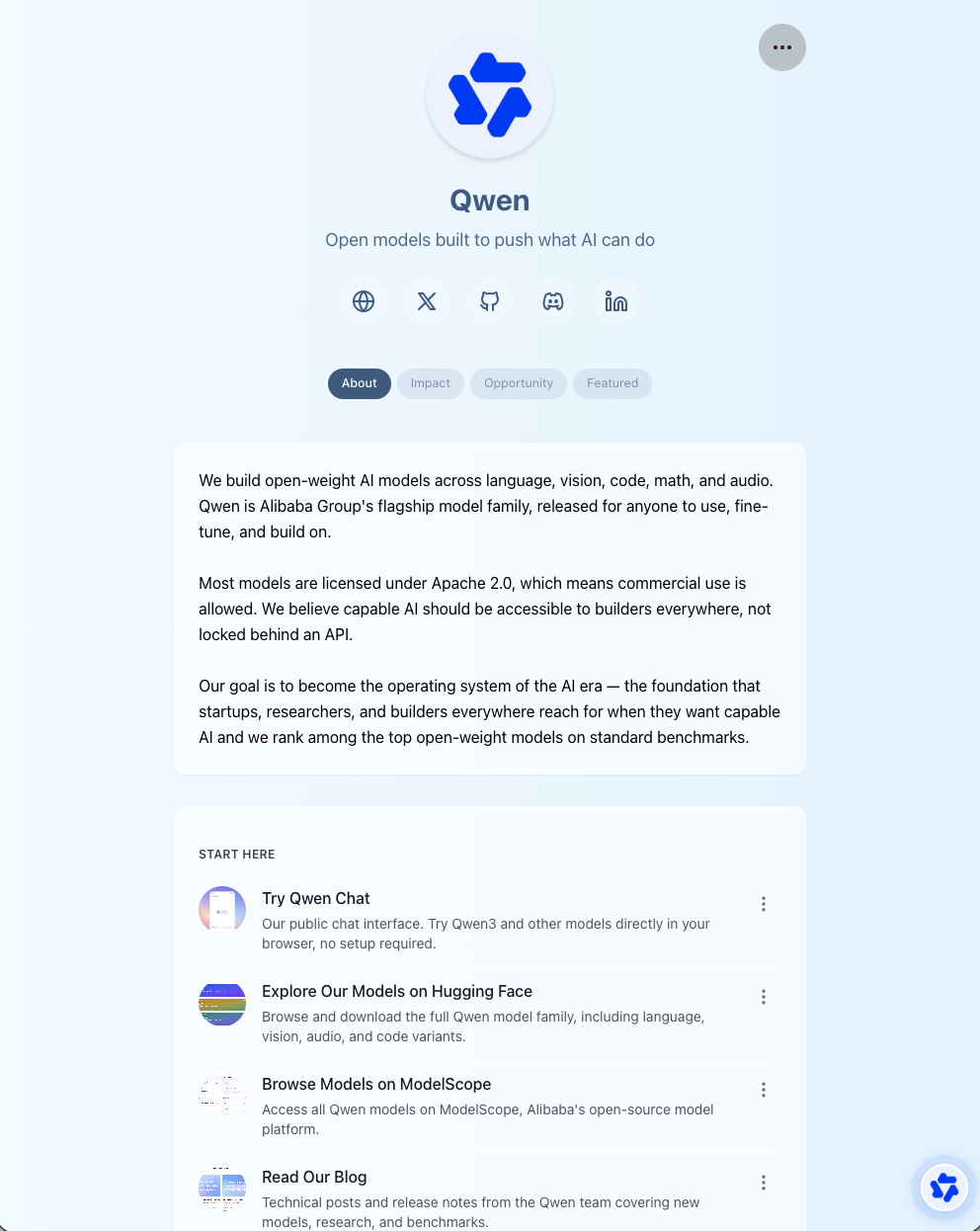
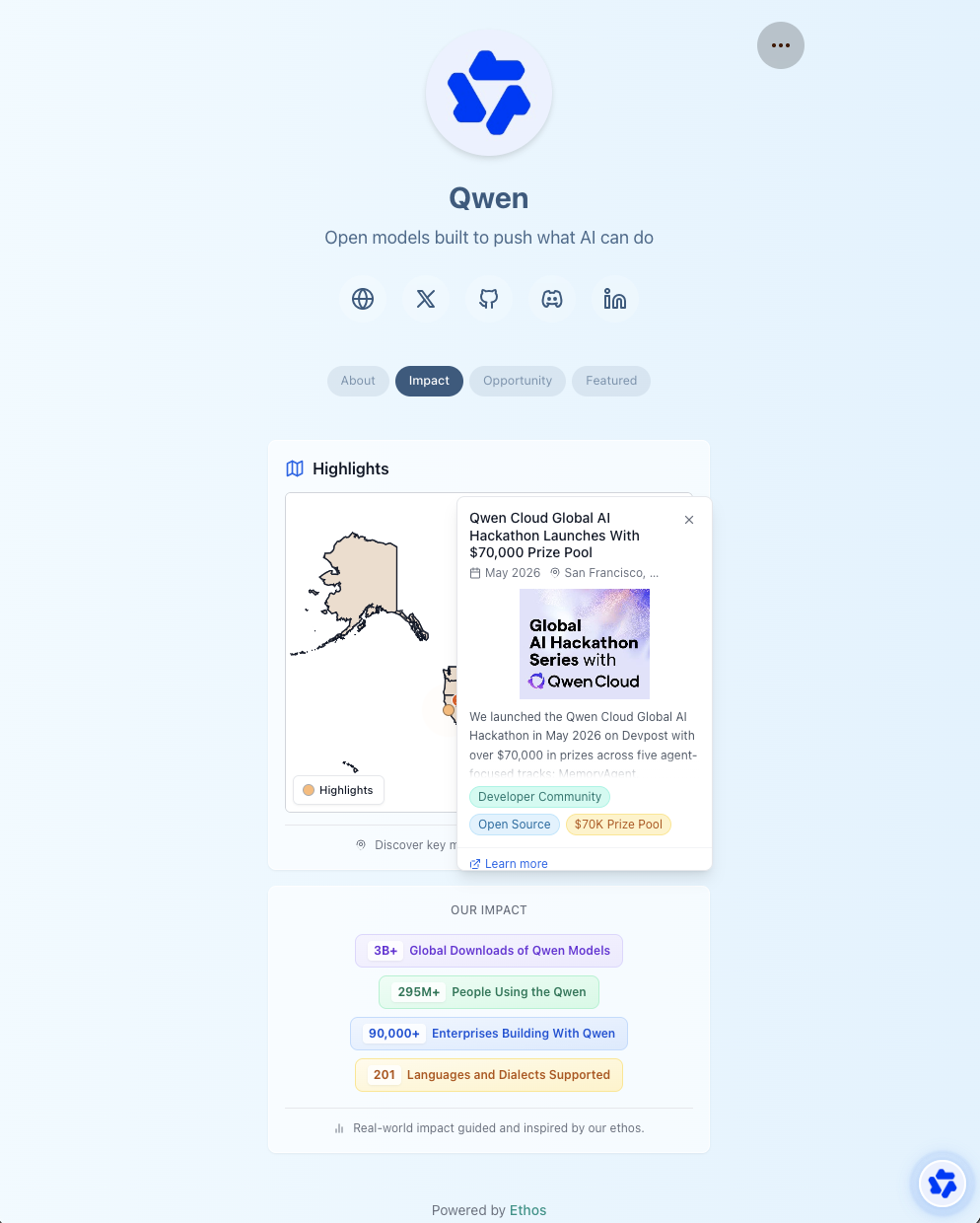
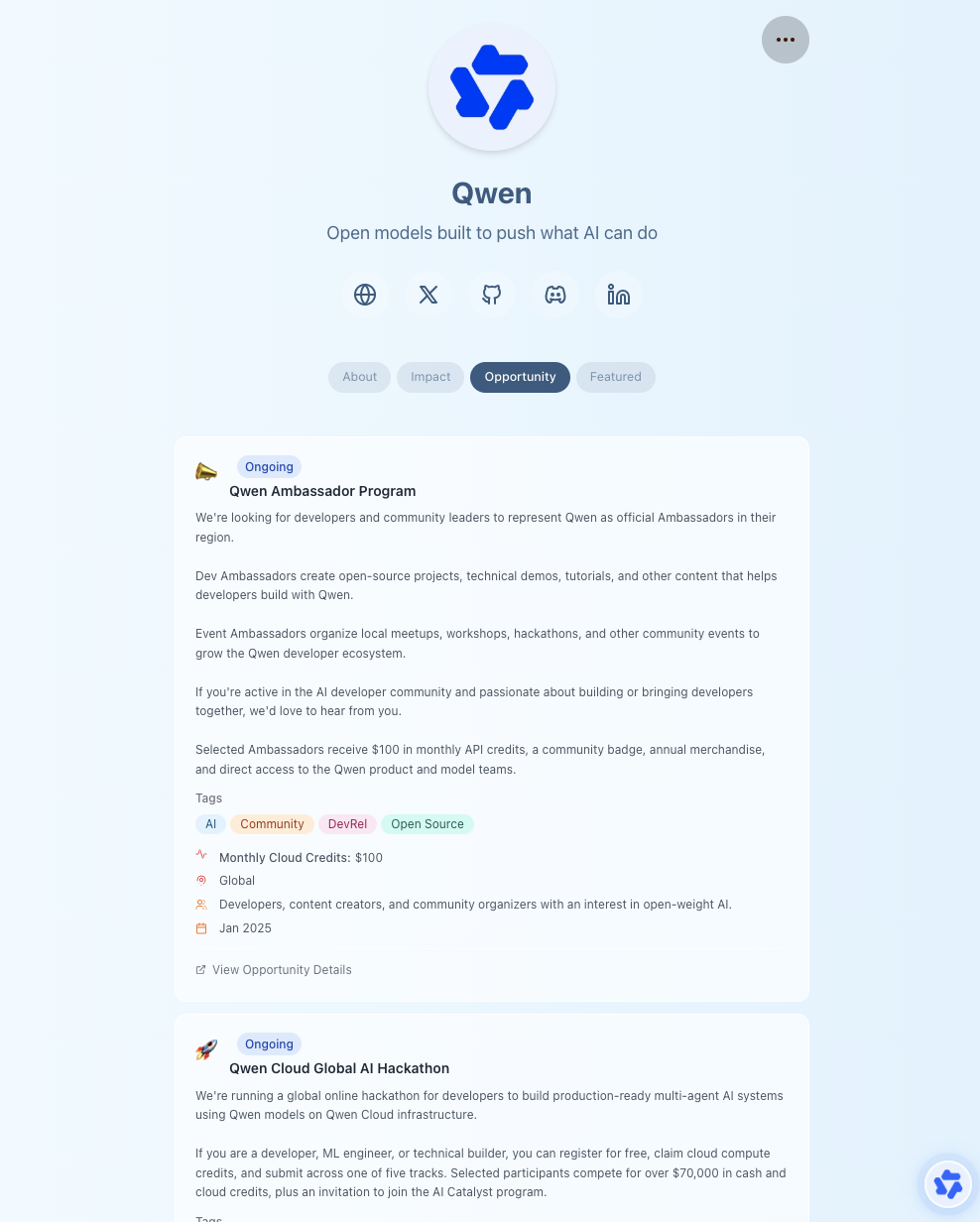
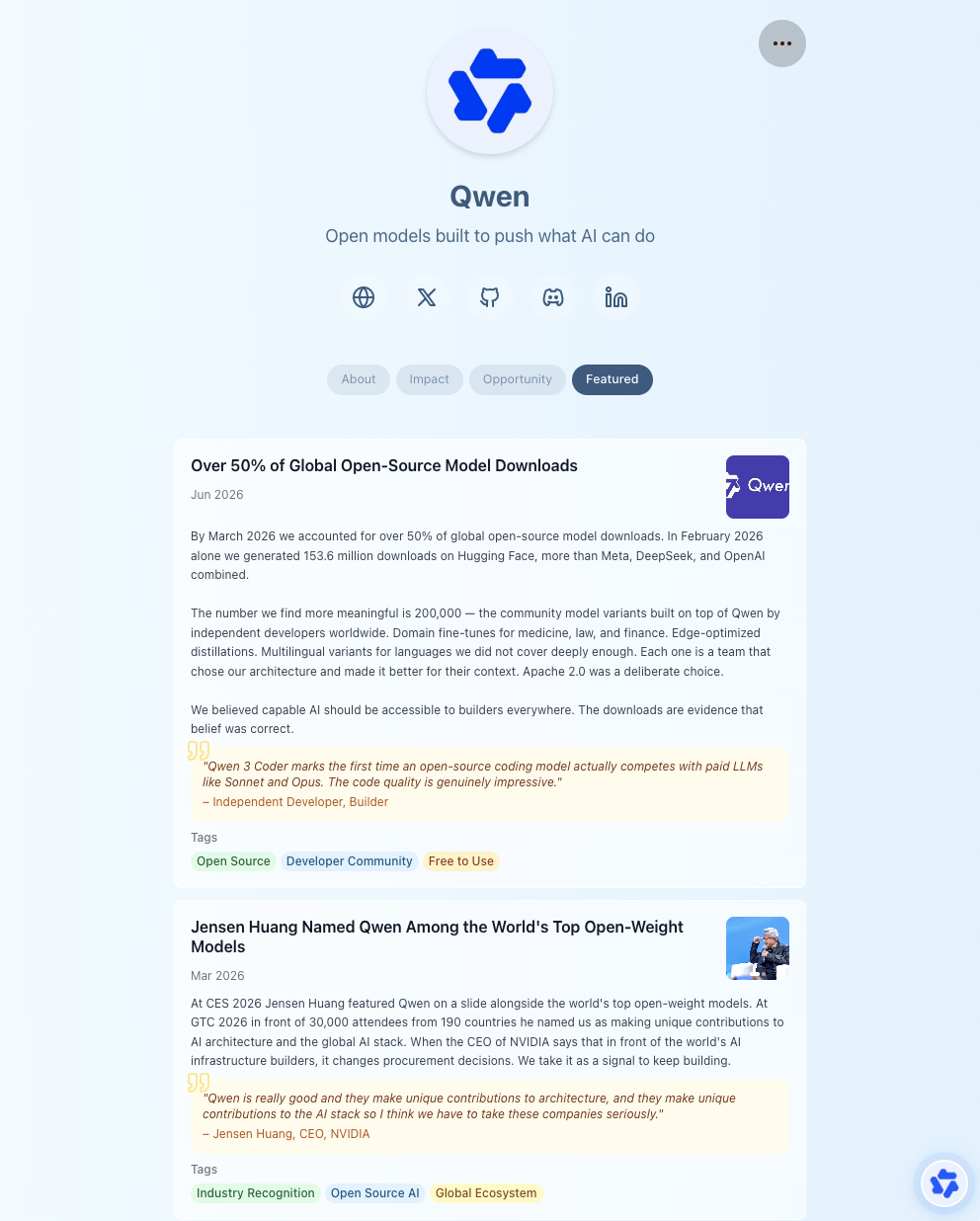
An Ethos profile that introduces Qwen, its AI ecosystem, and the different ways people can explore its models, tools, research, and resources.
A hands-on Qwen experience that used real Alibaba ecommerce data to help people explore user behavior, affinity profiling, and the broader Qwen model ecosystem.
A coding exercise that introduced Qwen through building a local code-review agent with Qwen-Coder and Qwen-Agent.
A product-building experience that paired Qwen with Accio to help people develop a product idea through research, sourcing, positioning, copy, and pitch development.
Turn your story, initiatives, and opportunities into experiences tailored to the communities you want to reach.